Forge Coupon
Challenge
The OWASP Juice Shop web application generates discount coupons using a predictable, reversible encoding rather than real cryptography. The goal was to mint a coupon for an arbitrary discount by reversing the encoding and forging a valid coupon for 80% off or above.
Approach
1. Obtain a Sample. I first grabbed a legitimate coupon code from the shop’s public BlueSky page to study its structure.
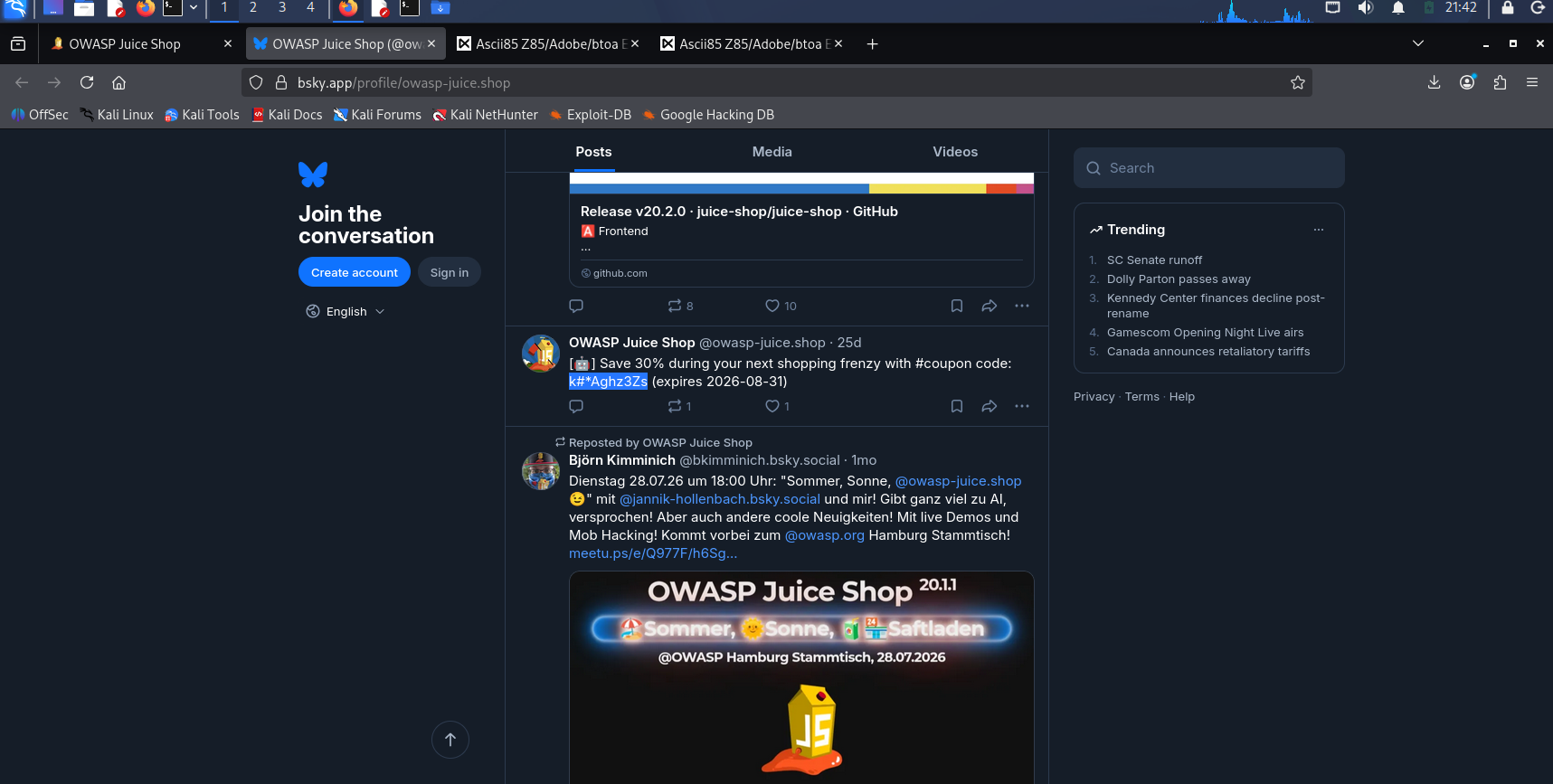 A legitimate coupon code sourced from the shop’s public BlueSky page.
2. Identify the Encoding. Analyzing the code for known signatures pointed to z85 (ZeroMQ Base-85). This was confirmed by cross-referencing the application’s package/backup files, which showed z85 in use.
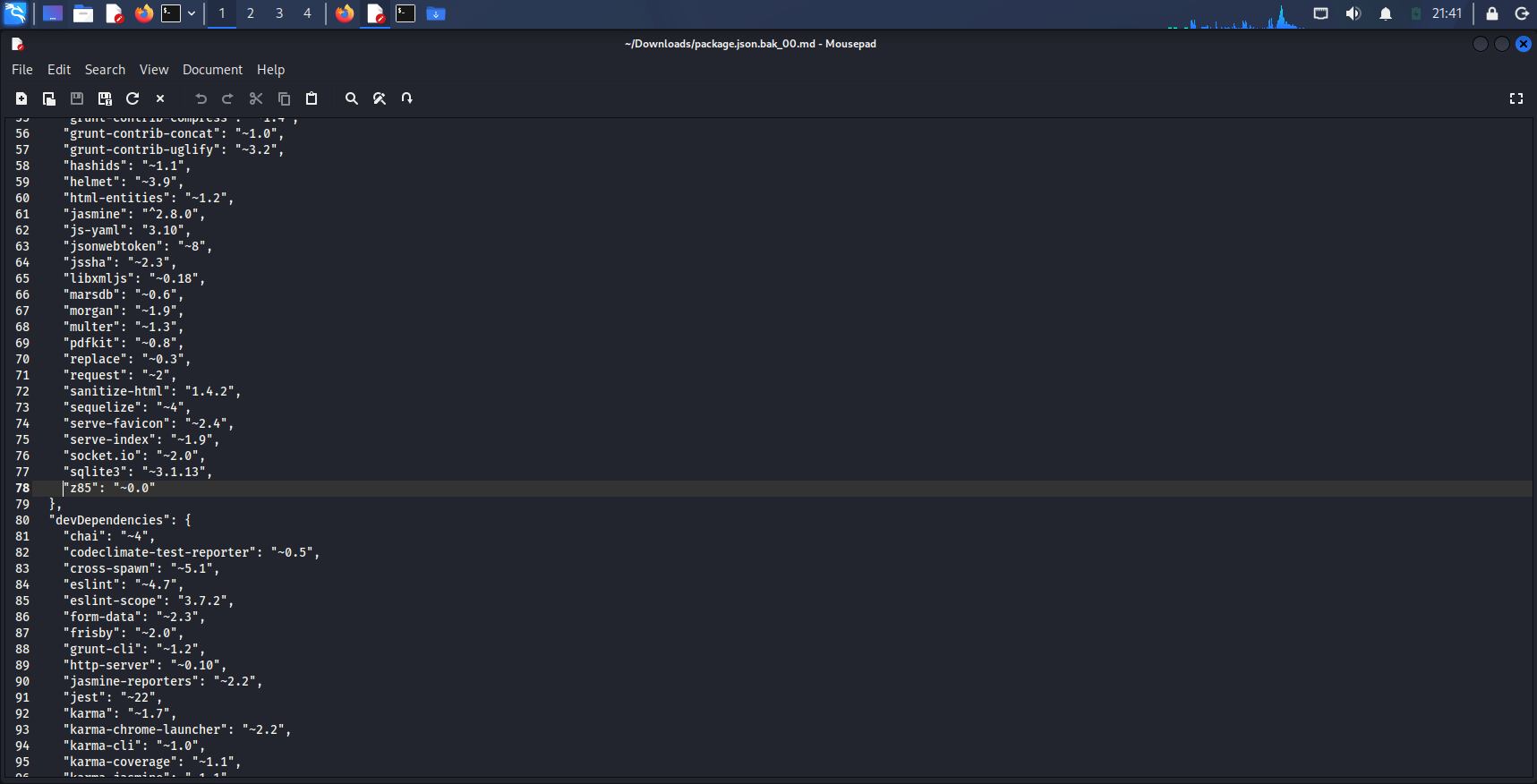 The application’s backup file confirms z85 is the encoding in use.
3. Decode the Structure. Running the coupon through a decoder exposed the plaintext layout, which included the discount amount as a field at the end of the structure.
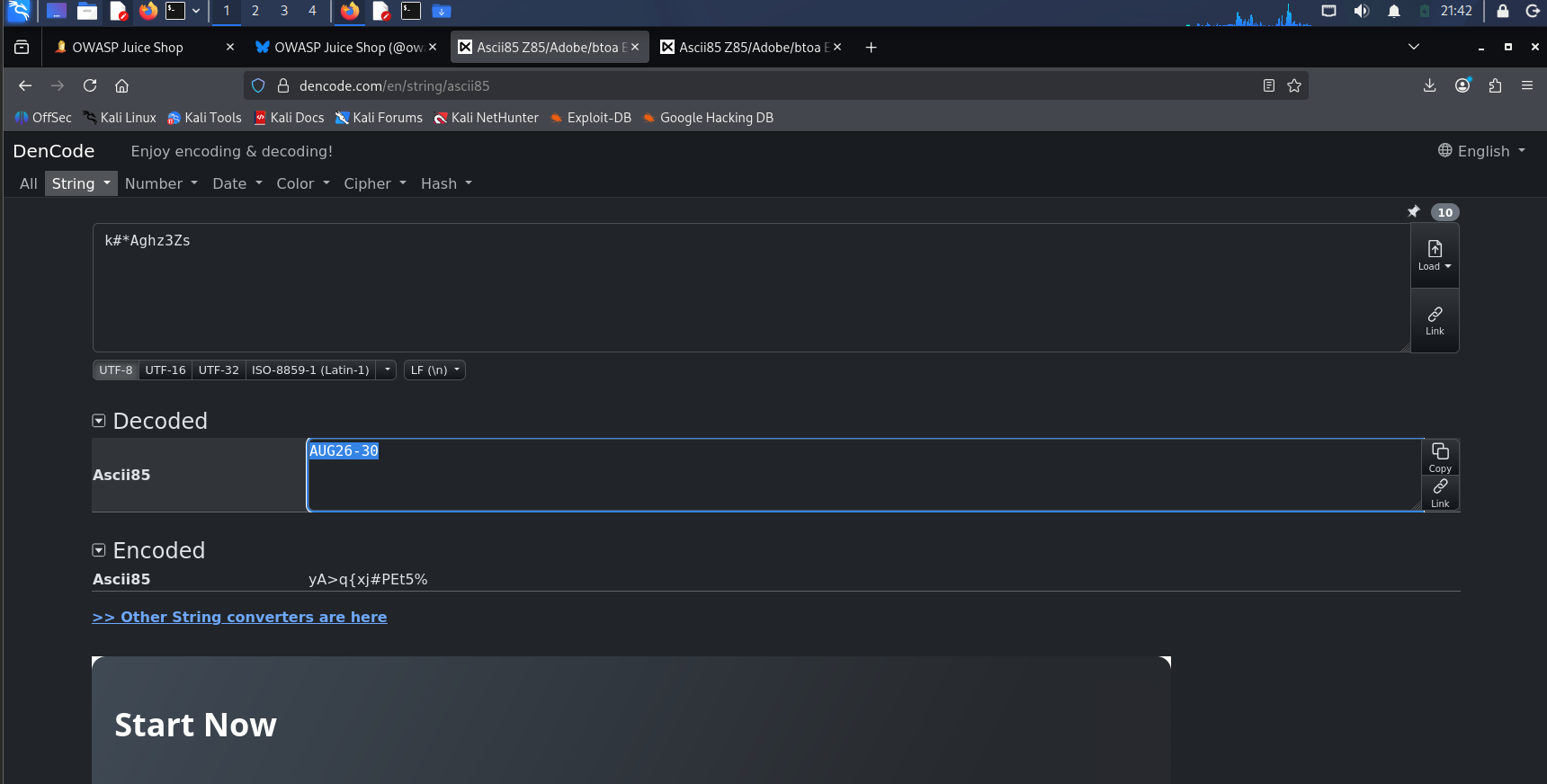 Decoding exposes the plaintext structure, including the discount amount field.
4. Tamper and Re-Encode. Because the value is only encoded, not signed, I edited the discount field to an arbitrary percentage and re-encoded it back to a valid-looking z85 coupon.
5. Confirm Impact. Applying the forged coupon at checkout on any account applied the inflated discount successfully.
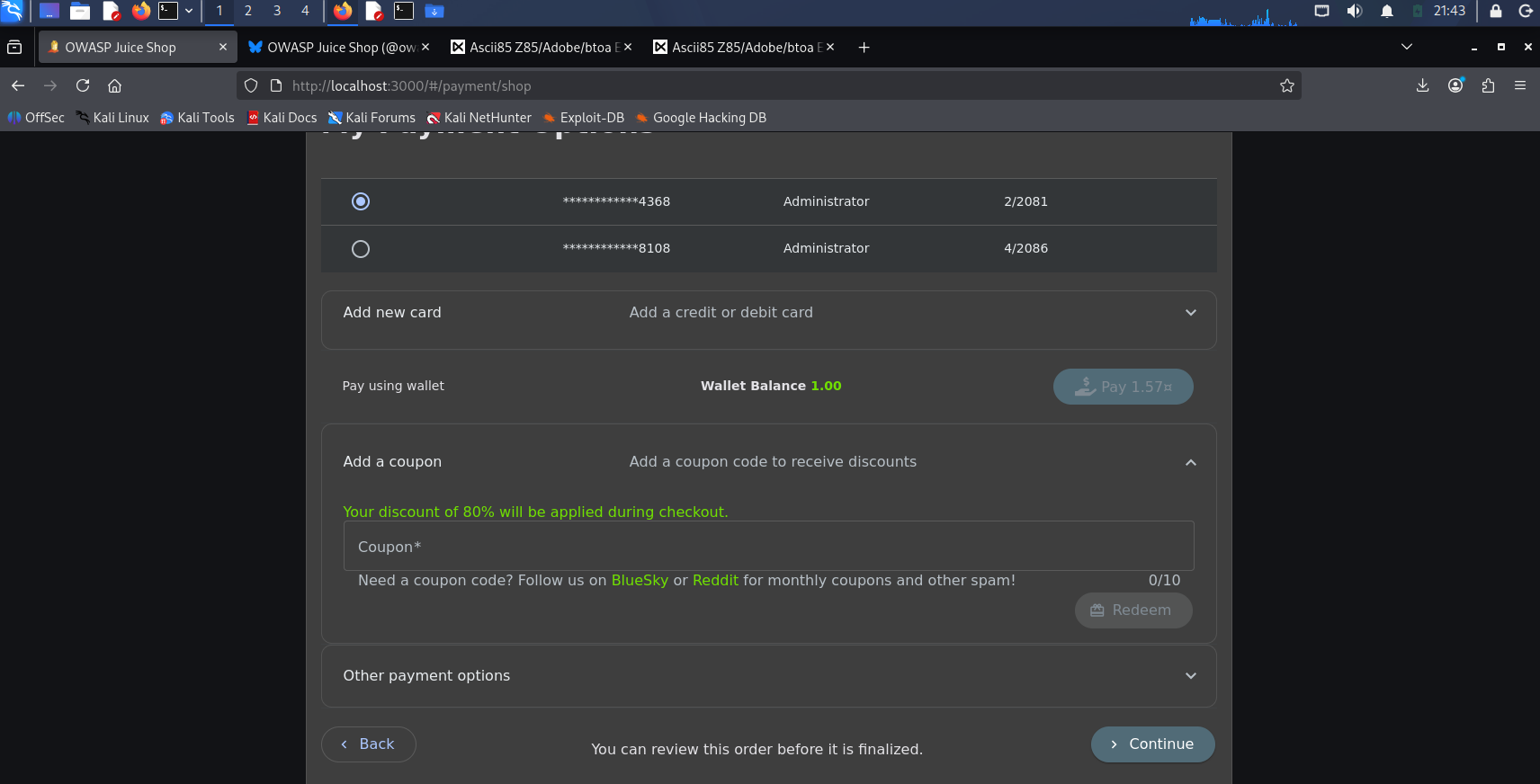 The forged coupon applies an arbitrary discount at checkout.
Defensive Analysis
The root cause is using a reversible encoding for a value that authorizes a financial action. Encoding provides zero integrity because it’s trivially reversible and re-writable. Values that grant discounts, credit, or access (coupons, gift cards, tokens) need a real cryptographic guarantee, such as a server-side signature (e.g. HMAC) or authenticated encryption (AES-GCM) so any tampering invalidates the value. Client-visible fields should never be trusted for authorization decisions without that integrity check.