Quizploit: Binary Analysis
Challenge
This challenge consists of a vulnerable C binary that contains a stack buffer overflow. The flag isn’t obtained by exploiting the overflow directly. Instead the challenge asks 13 questions about the binary’s structure, mitigations, and source, and answering all of them reveals the flag.
Approach
After pulling down the binary and its C source, and connecting to the remote service over netcat, I worked through the questions with three standard analysis utilities.
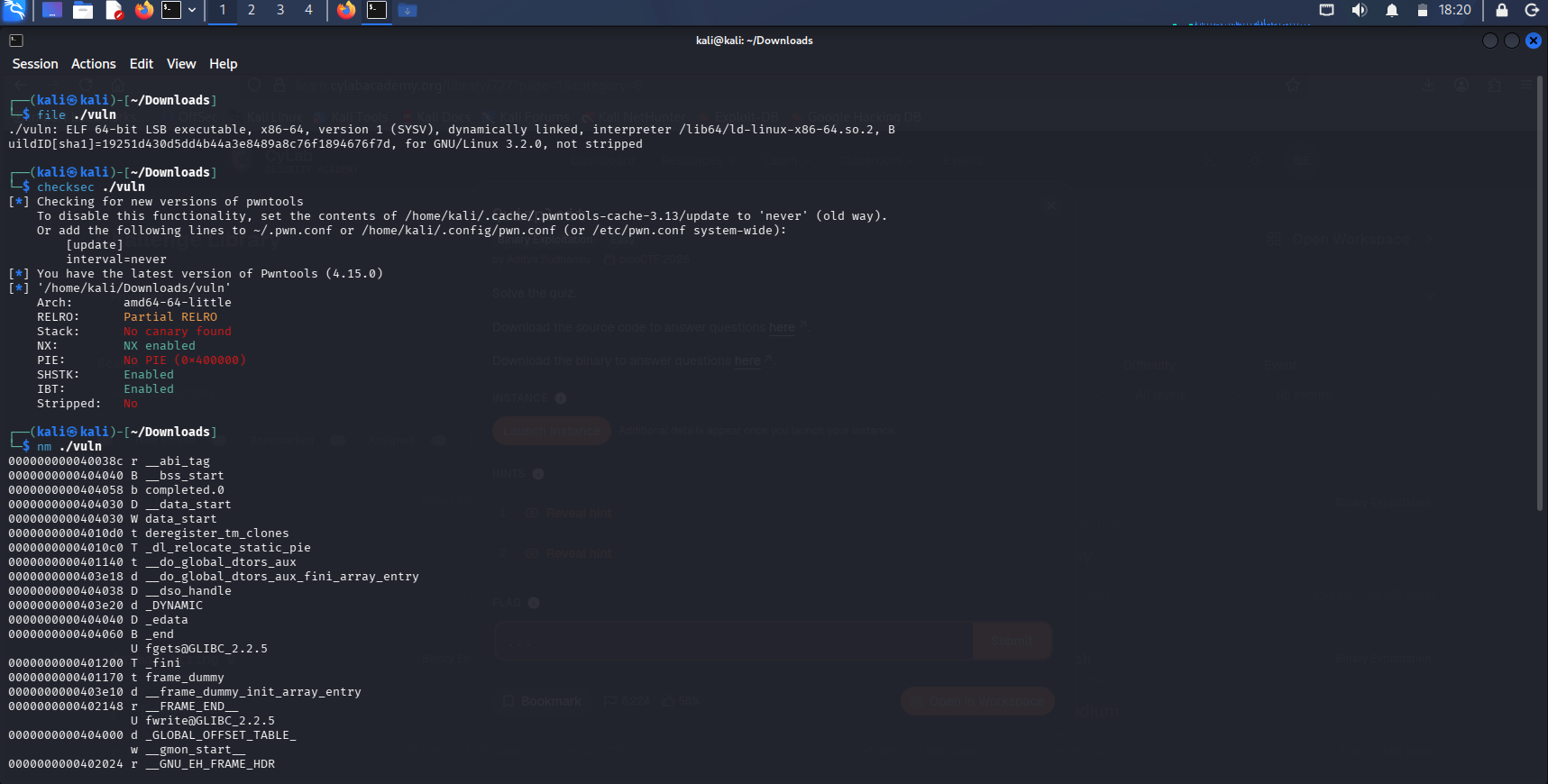
file identified the target as a 64-bit ELF executable, which answered the first several questions about its type and architecture.
 The
The file utility inspects the binary and reports it as a 64-bit ELF executable.
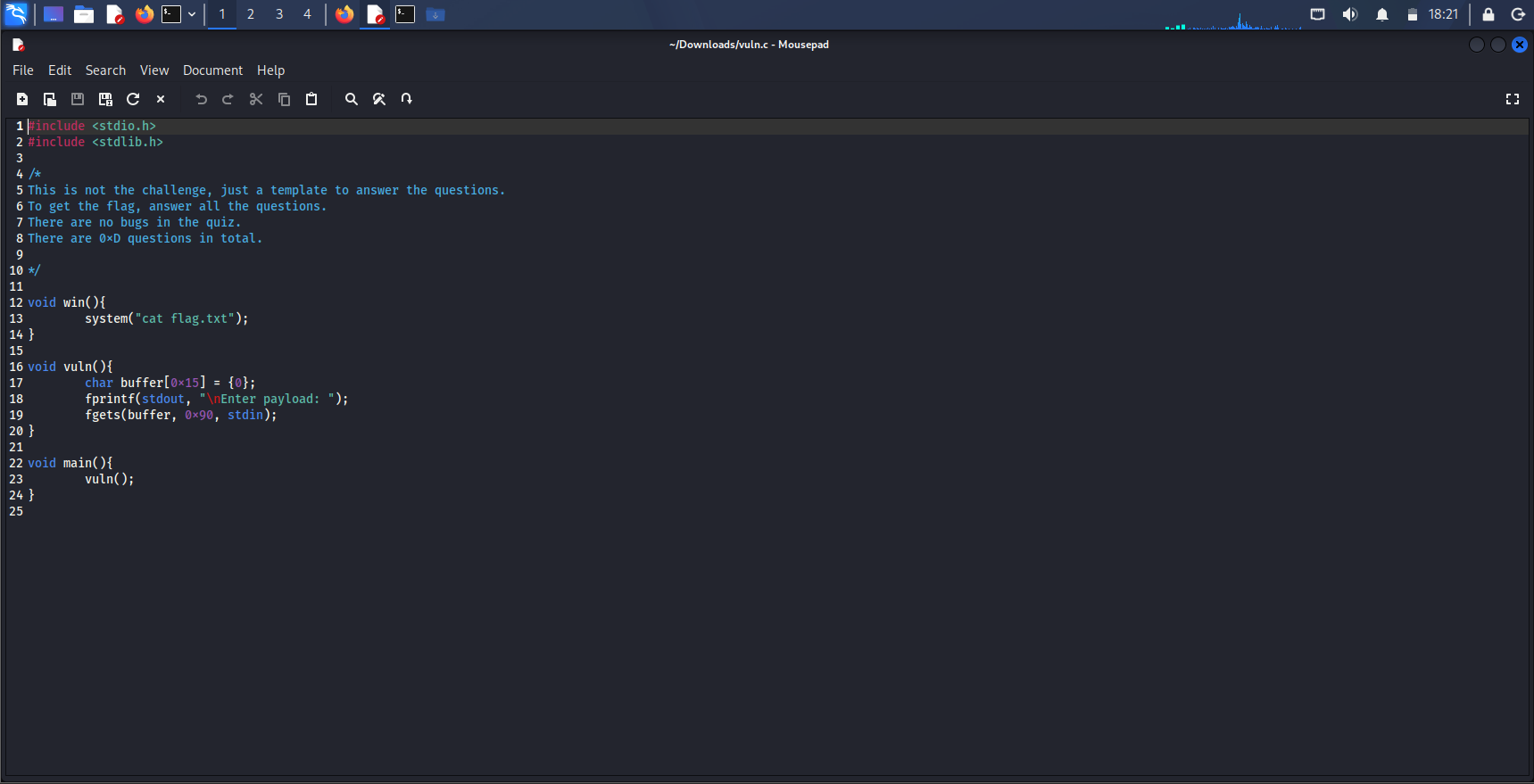
Source review of the vuln() function showed the buffer declared as 0x15 bytes, which is hex for 21, the value the overflow question was looking for.
 The
The vuln() buffer is declared as 0x15.
**checksec reported the binary’s hardening with NX enabled, which means the stack is non-executable, and a real exploit would need a code-reuse approach rather than injected shellcode to exploit the buffer overflow.
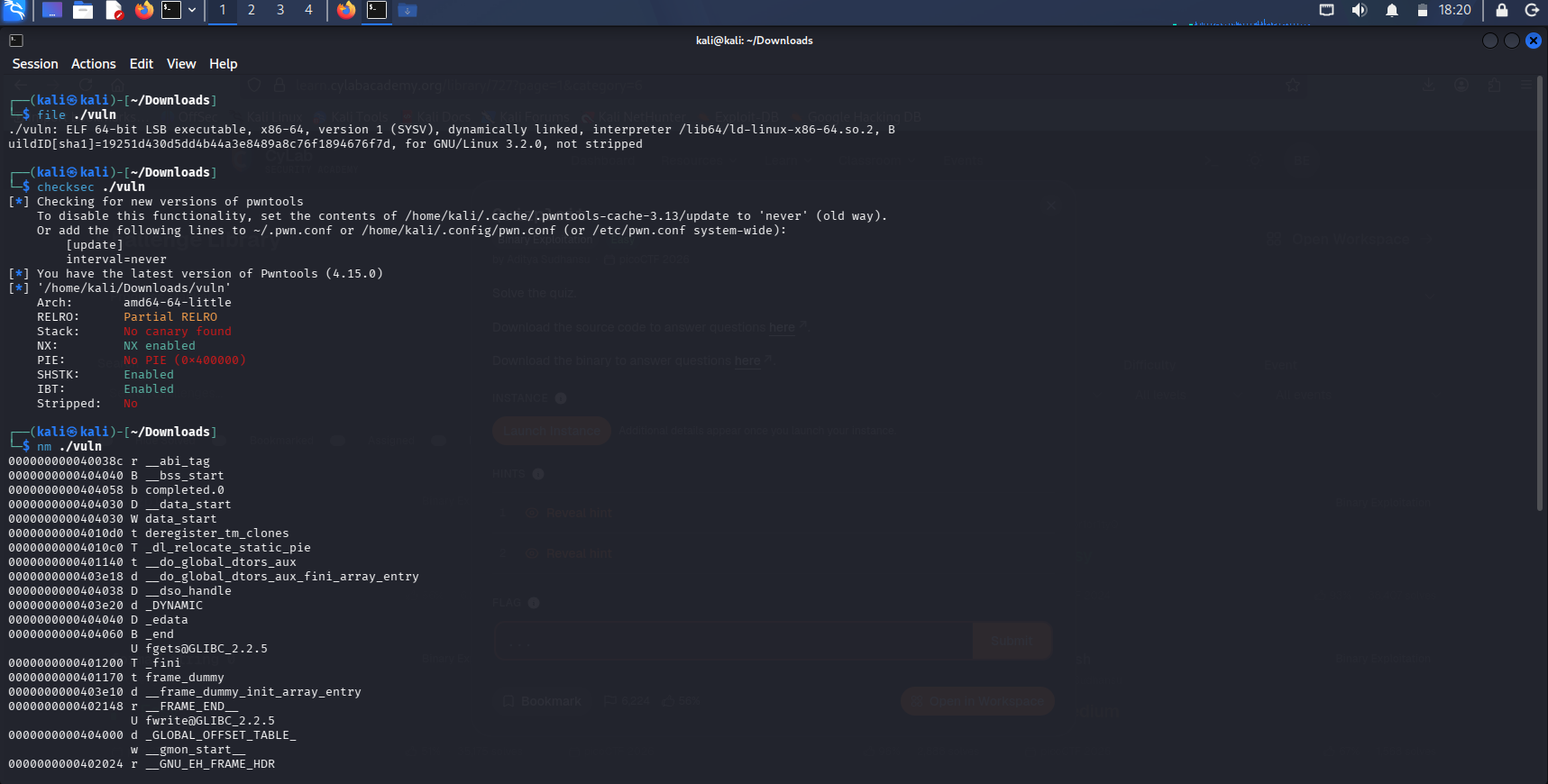
checksec confirms NX is enabled.
nm dumped the symbol table to locate the win() function, which is an unused function never called during normal execution at address 0x401176. That address was the final answer that unlocked the flag.
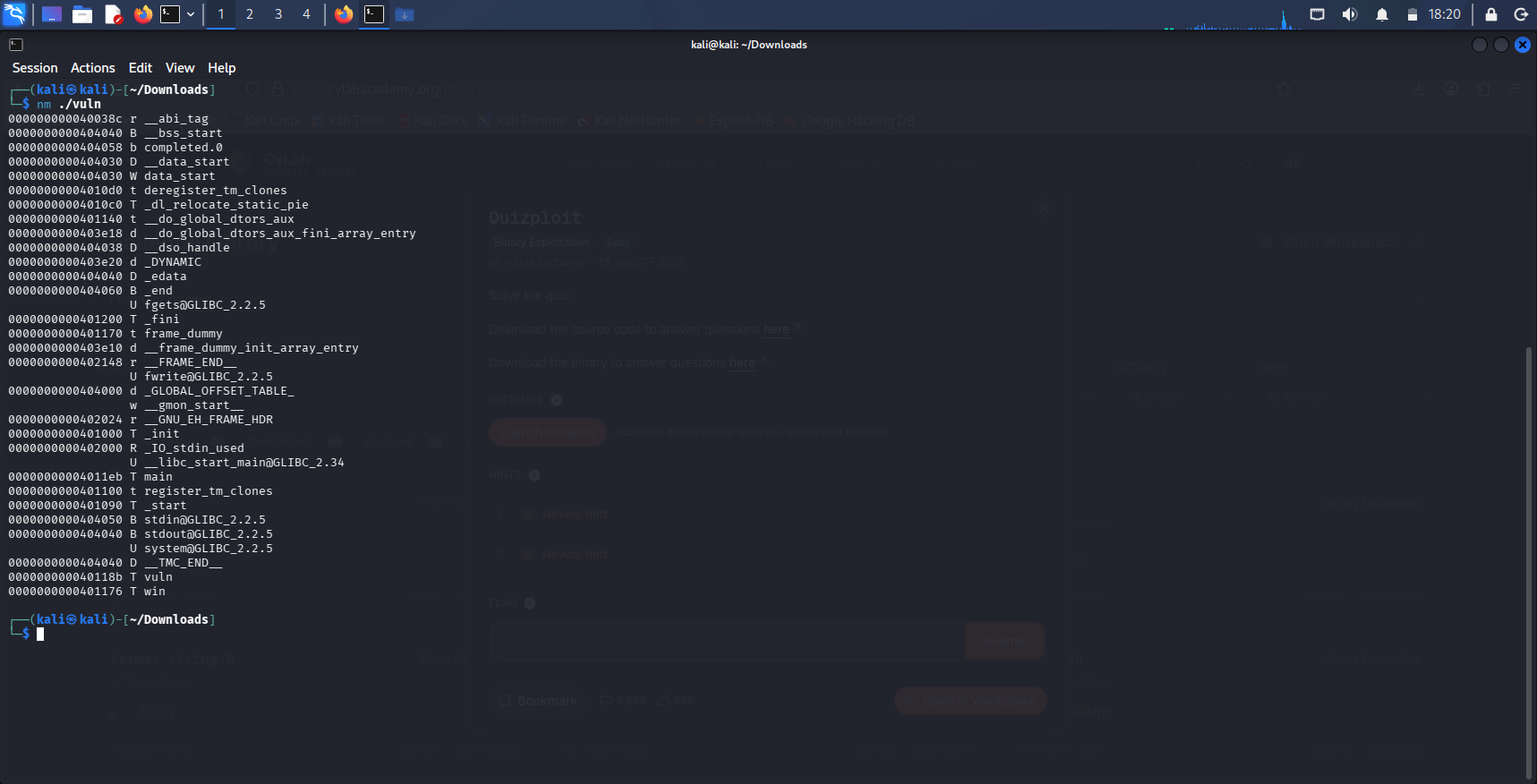
nm locates the unused win() function at 0x401176.
Key takeaway
- The core lesson is that binary analysis is an essential skill required to effectively identify vulnerabilities and craft subsequent exploits. The
file,checksec, andnmutilities tell you the architecture, and studying the C source code allows exploit developers to understand what mitigations have to be overcome for their exploits to work.